

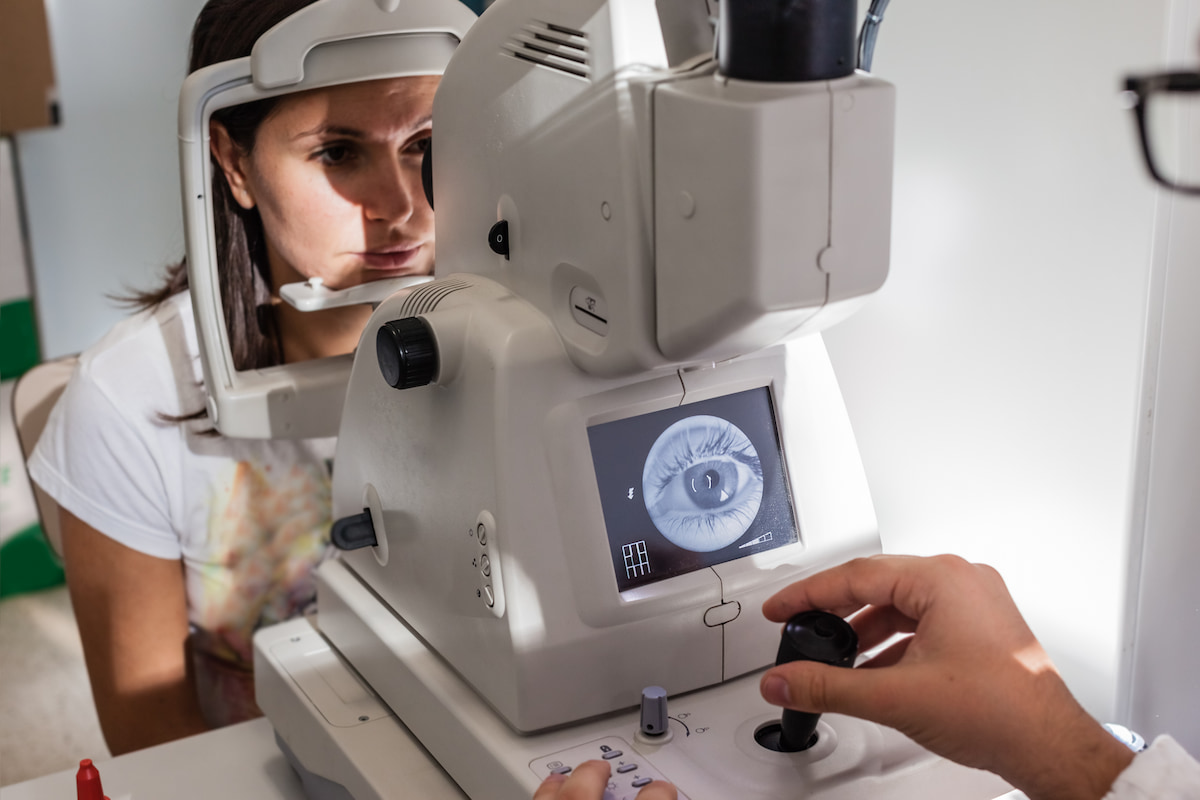
Optomap® retinal imaging gives your eye doctor a detailed image of the back of your eye in seconds. Since the scan is quick, painless, and does not require anything to touch your eye, many patients ask whether it can take the place of dilation.
The answer depends on your eye health, medical history, symptoms, and what your doctor finds during the exam. An Optomap retinal exam is a valuable way to evaluate and monitor retinal health, but dilation may still be recommended in some situations.
What Optomap retinal imaging can show
The retina is the light-sensitive tissue at the back of the eye. It is also the only place in the body where an eye doctor can directly examine blood vessels.
Optomap captures an ultra-widefield digital image of the retina. It can capture 82% of the retina in one image, creating a record your doctor can compare over time. These images can help identify changes associated with eye conditions and overall health concerns, including glaucoma, age-related macular degeneration, diabetic retinopathy, high blood pressure, and diabetes.
The scan itself takes less than a second per eye. You simply look into the device, and a flash of light signals that the image has been captured.
Why dilation may still be needed
Dilation uses eye drops to widen the pupils, allowing your doctor to examine more of the inside of your eyes directly. Optomap and dilation are not competing tests — they can provide complementary information.
Your doctor may recommend dilation if you have:
- New flashes, floaters, or changes in vision
- Diabetes, high blood pressure, or a history of retinal disease
- A high prescription or another risk factor
- A family history of eye disease
- An unusual finding during your exam or on retinal imaging
- A need for a closer look at a specific area of the retina
Sudden flashes, a large increase in floaters, or a dark curtain in your vision should be evaluated promptly. These symptoms can sometimes signal a retinal problem that requires urgent care.
How your doctor decides what you need
A comprehensive eye exam gives your doctor the full picture. They consider your vision, eye health, medical history, family history, and any symptoms you have noticed before recommending additional testing.
Optomap can make retinal health easier to track from one appointment to the next. Dilation can give your doctor a closer view when they need more information. Depending on your needs, you may benefit from one or both during your exam.
Protect your retinal health
Optomap is an advanced, convenient tool for monitoring the retina, but it does not automatically eliminate the need for dilation. The right recommendation is based on what will give your eye doctor the clearest understanding of your eye health.
If you have questions about retinal imaging or dilation, schedule an eye exam to discuss the best approach for your eyes.